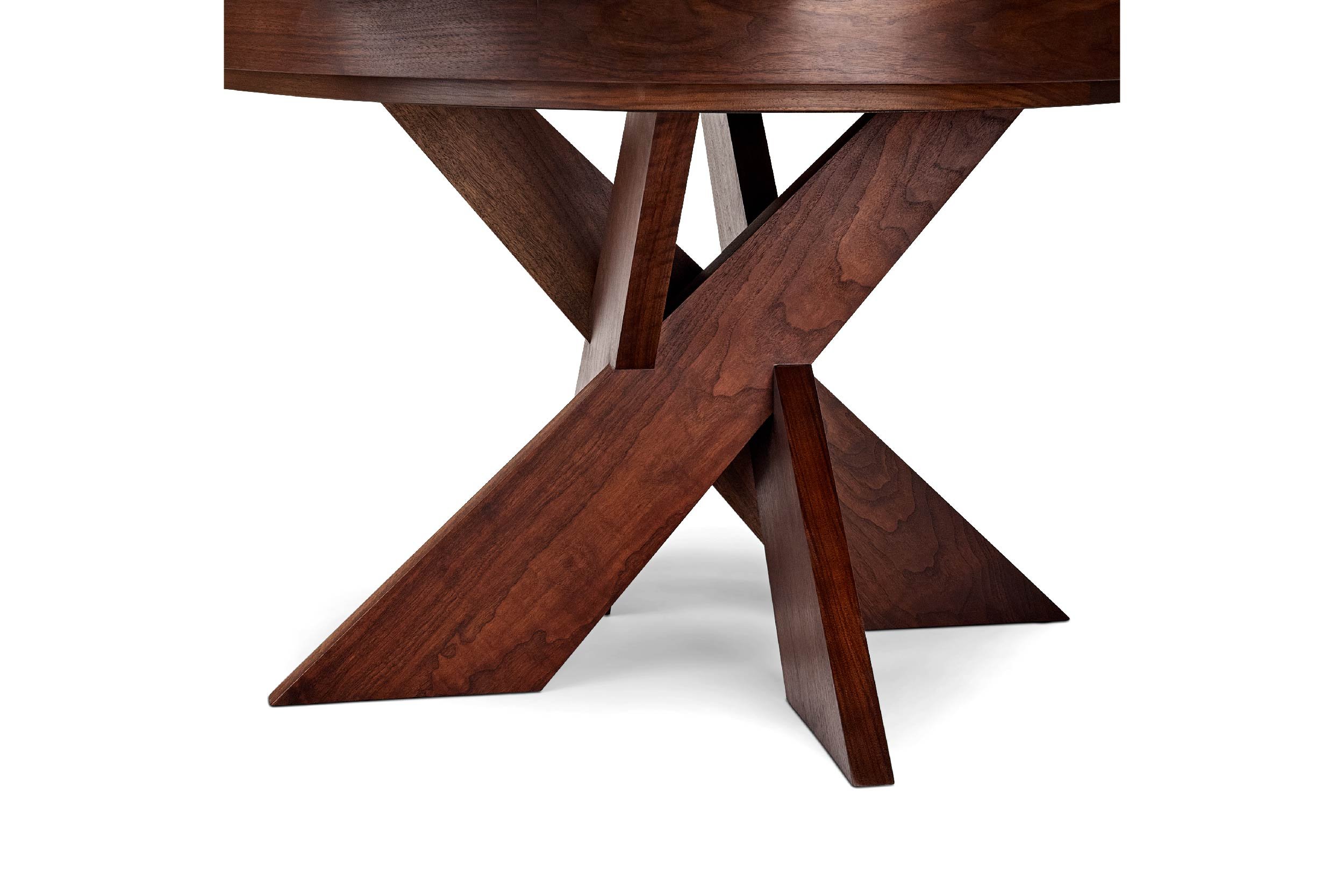
The Iris Table
A handcrafted piece that moves like nothing else in modern furniture.
The Story
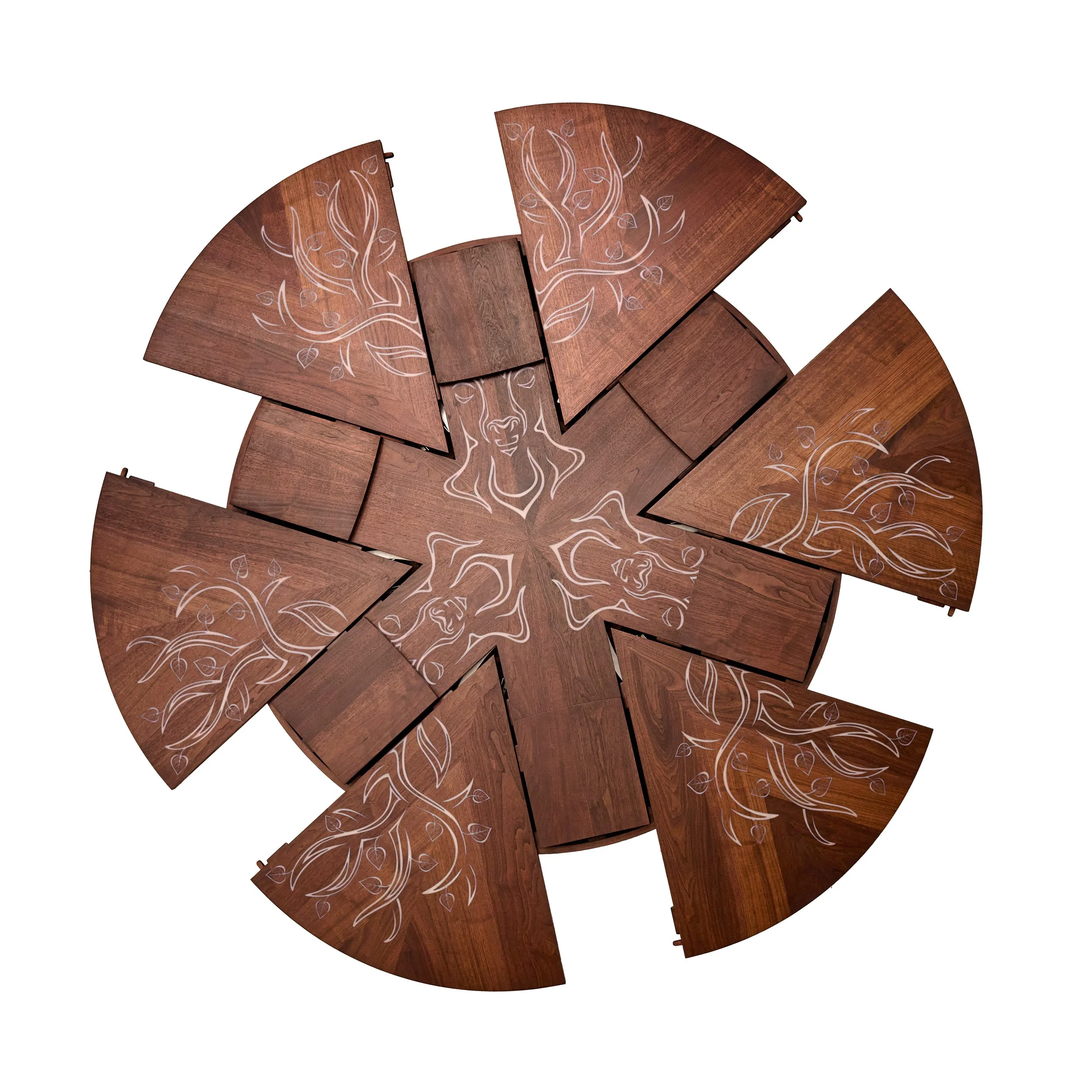
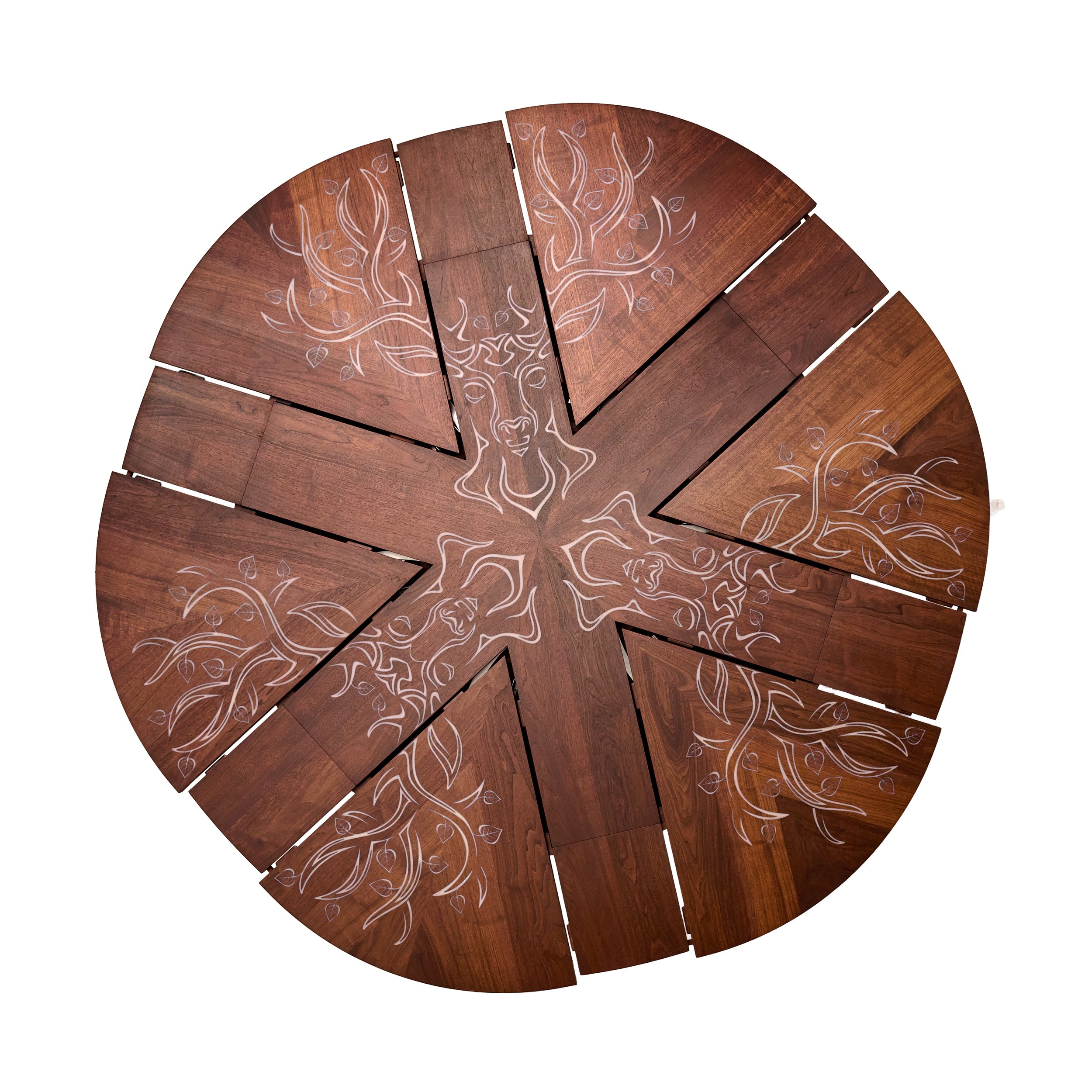
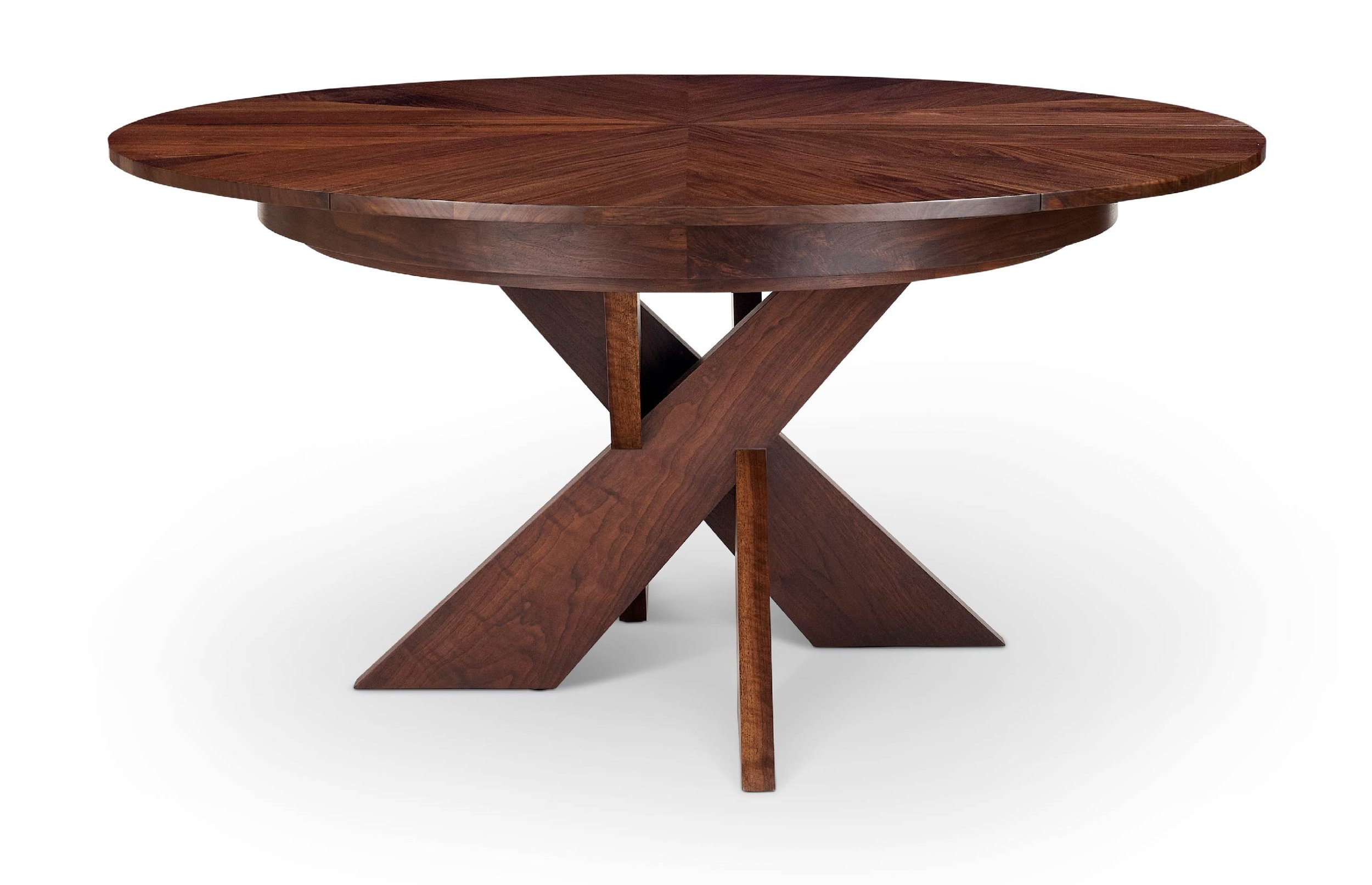
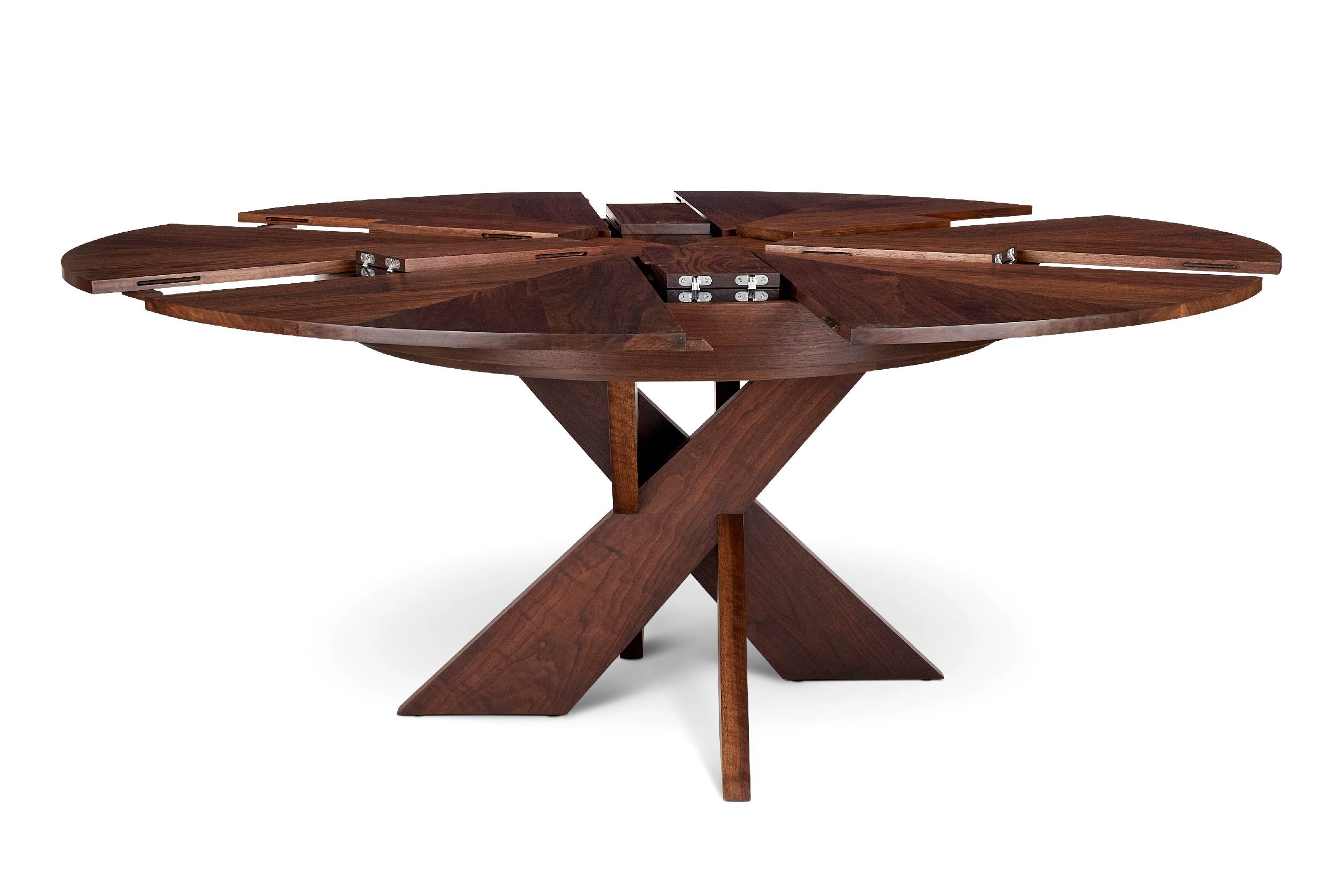
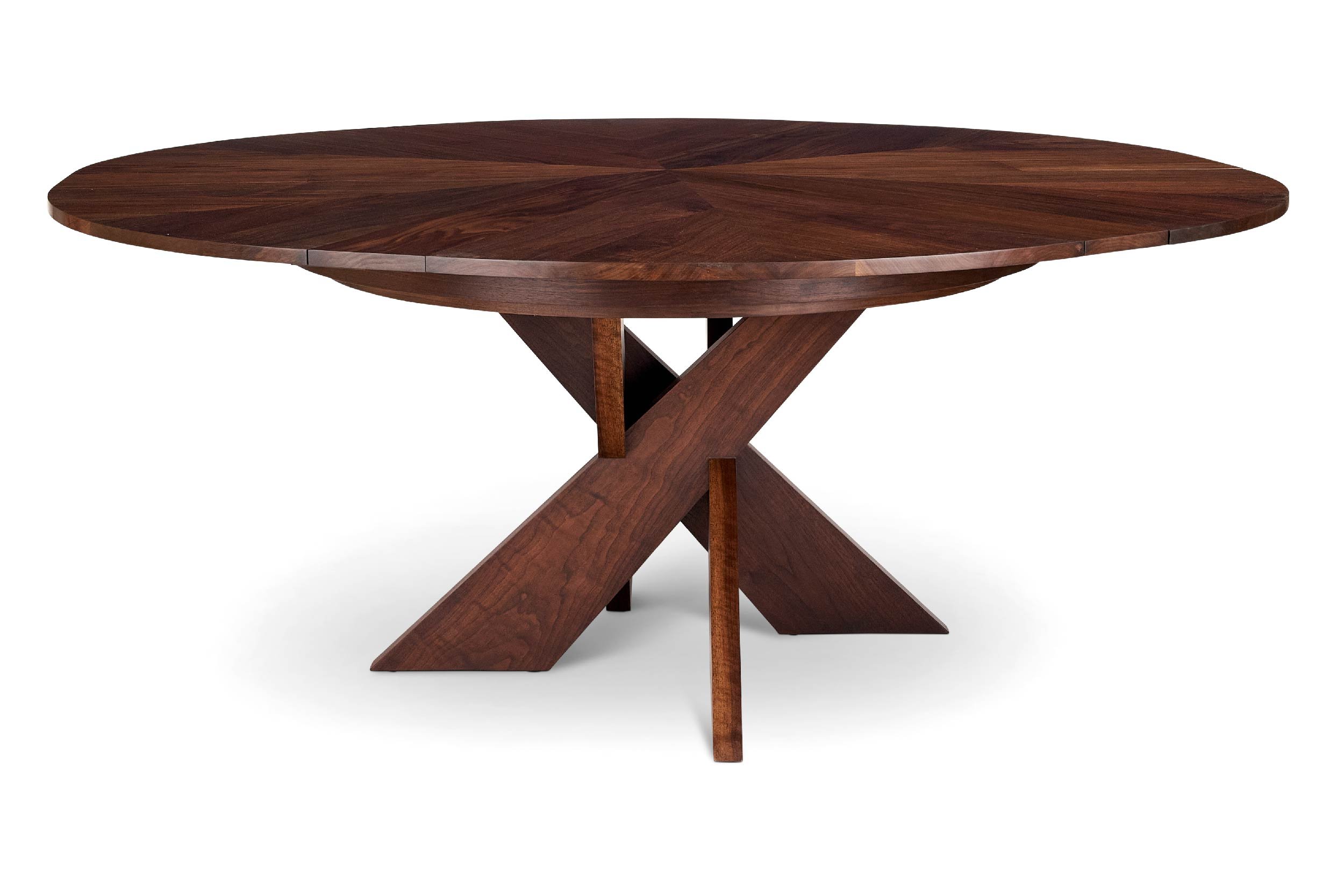
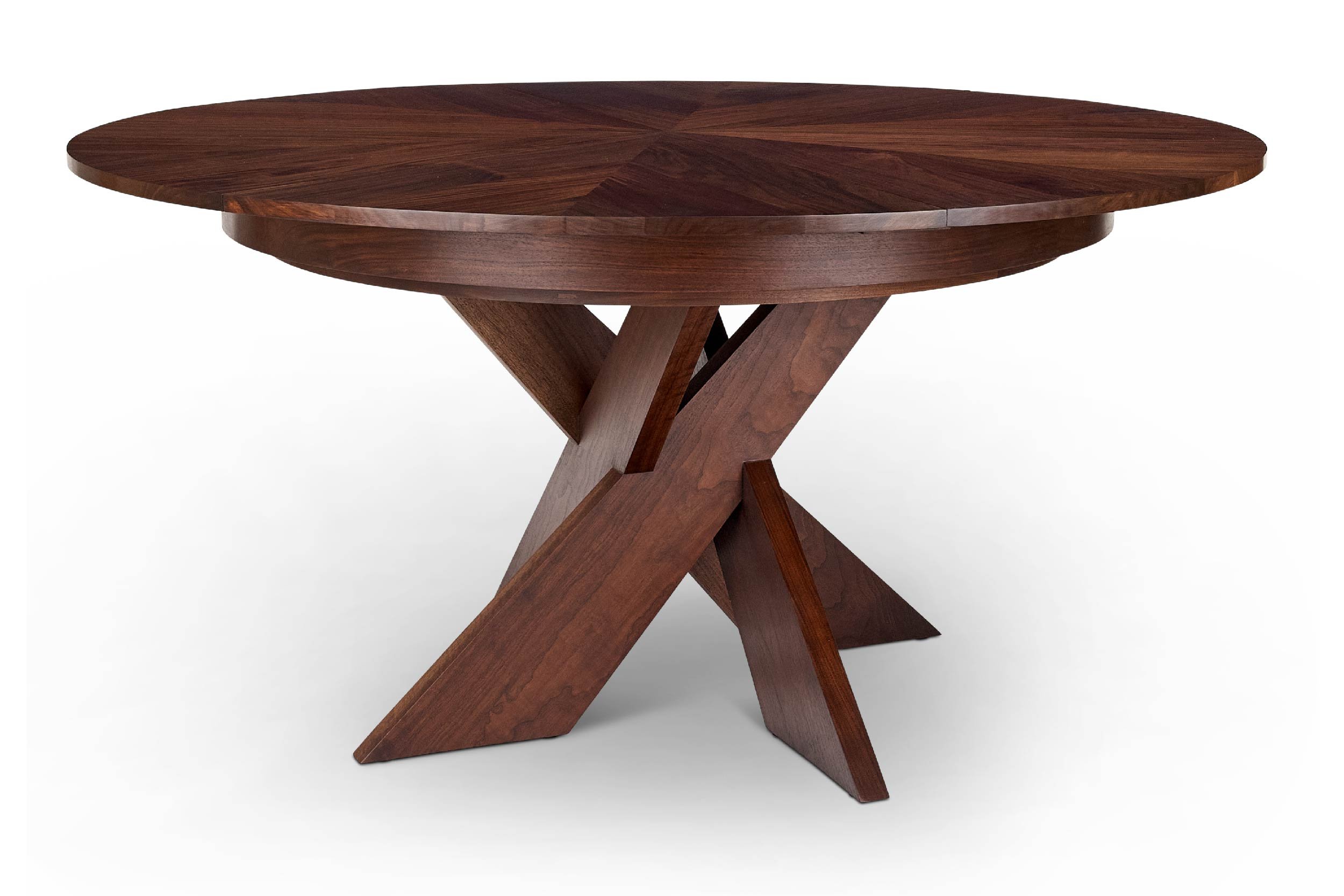
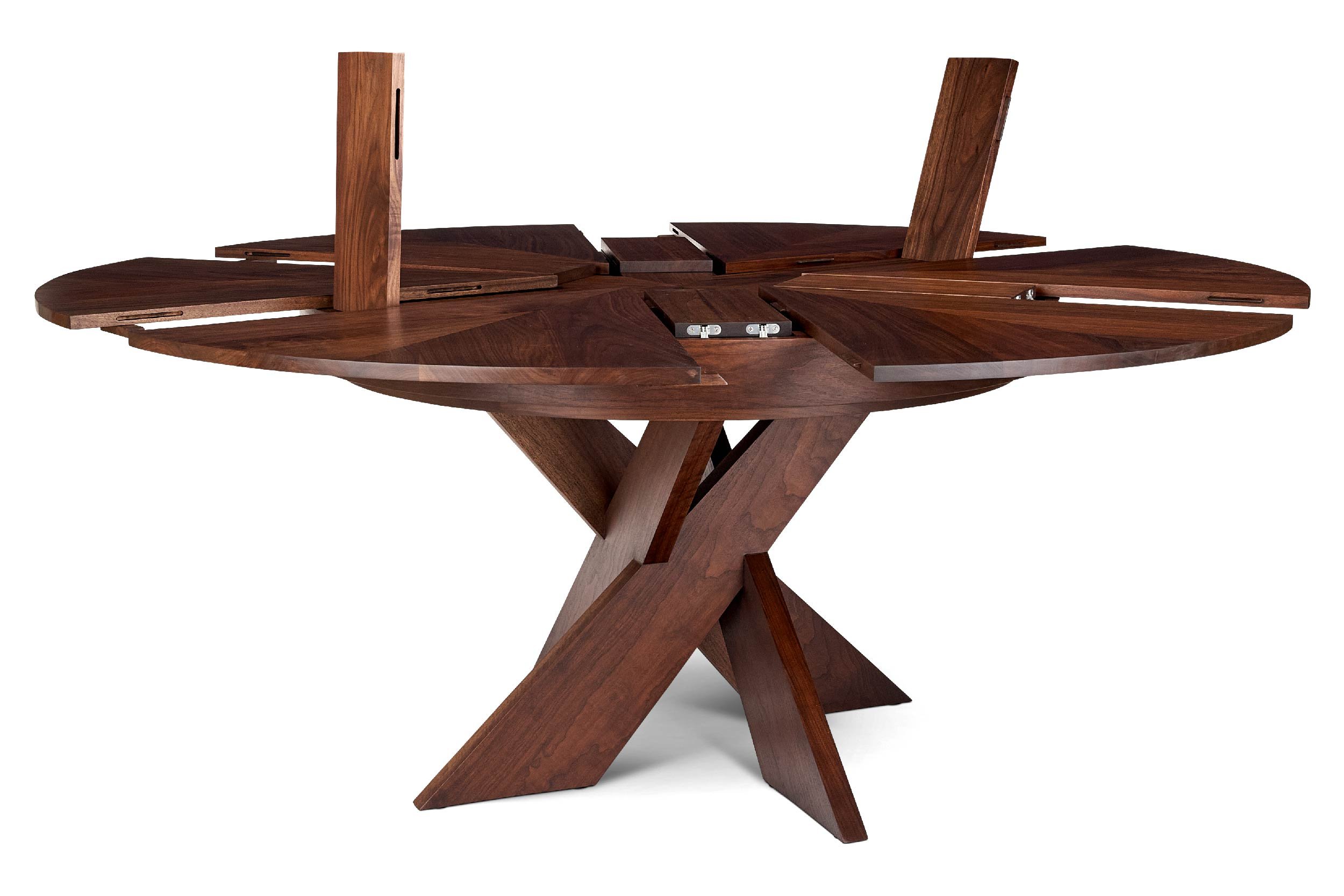
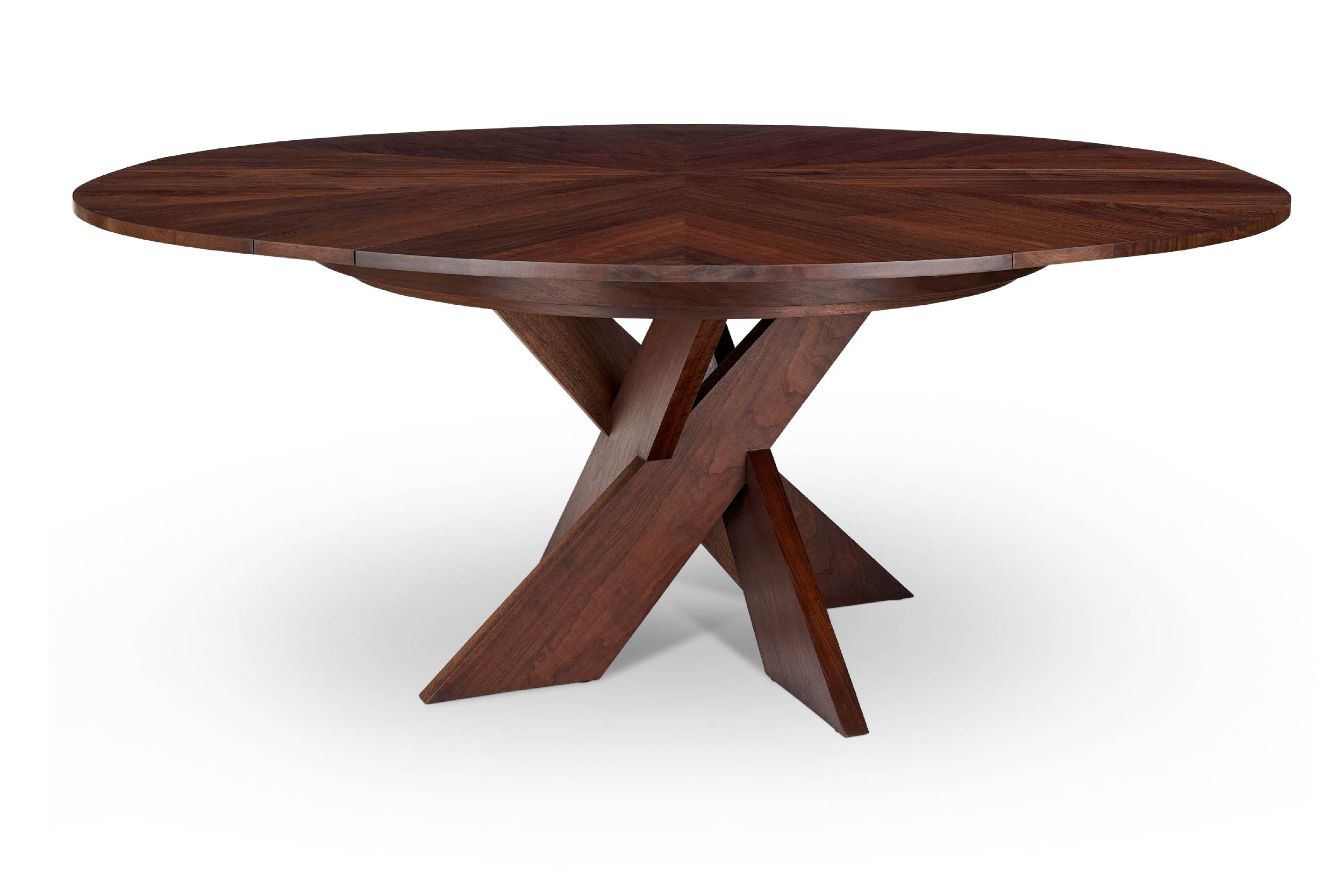
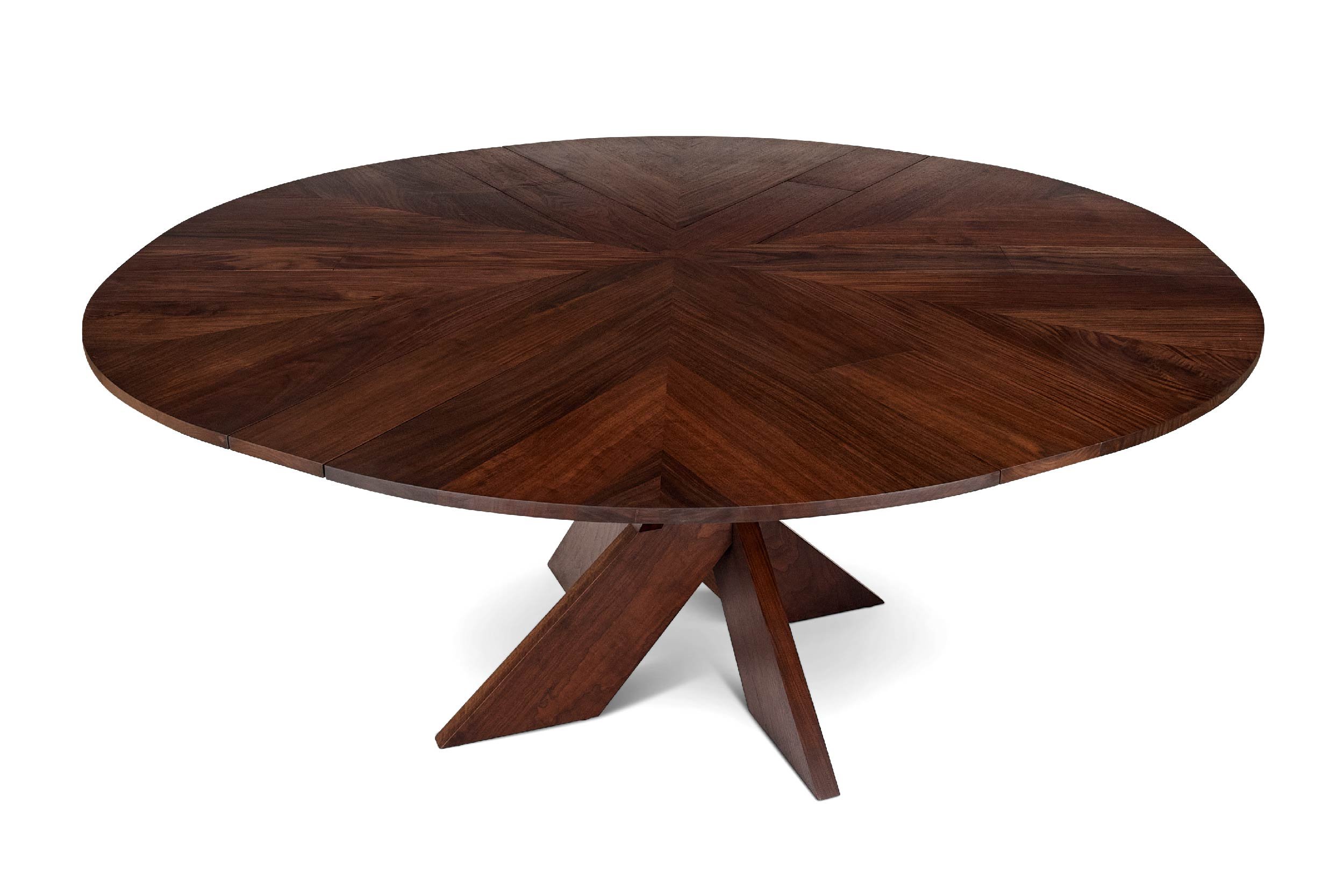
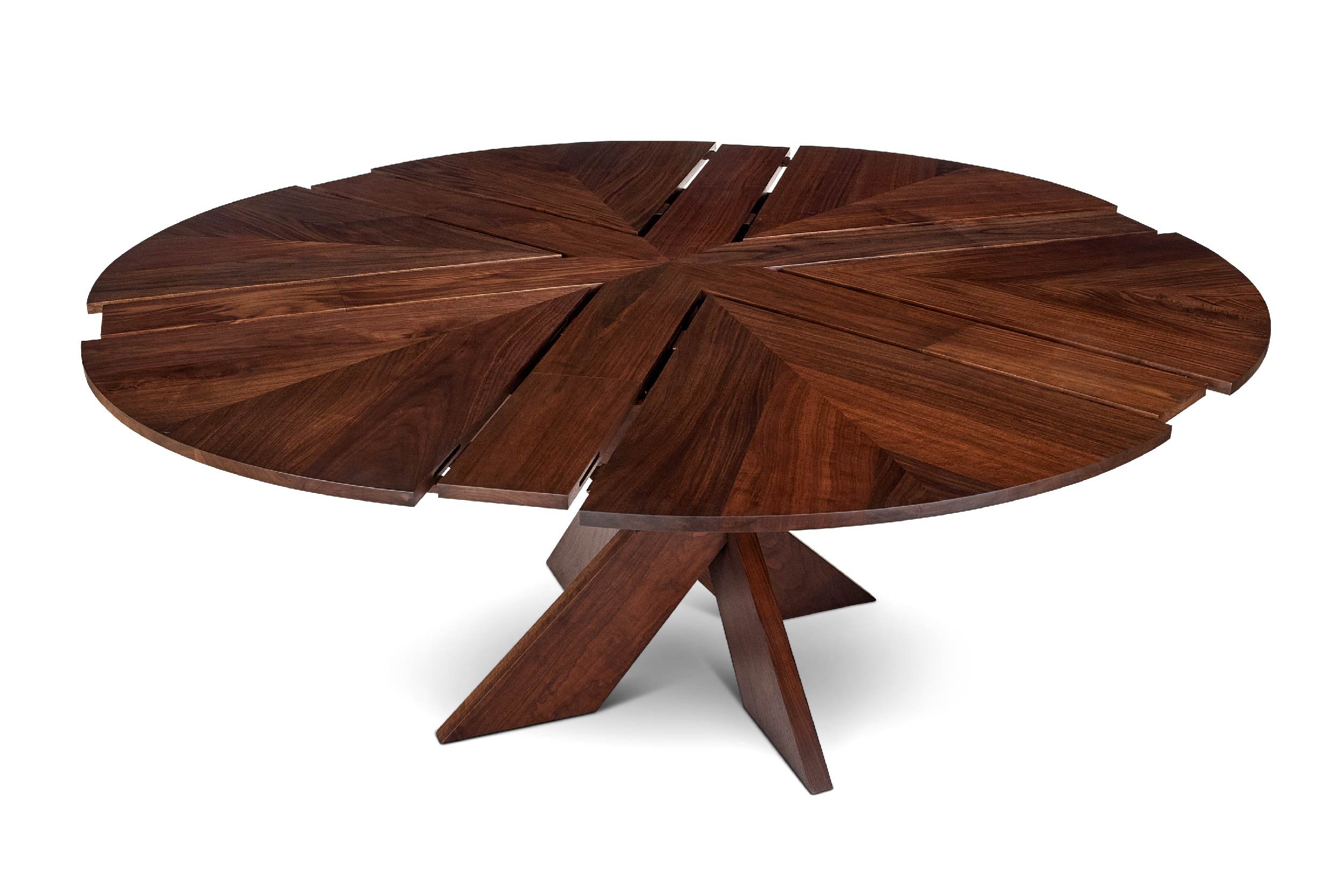
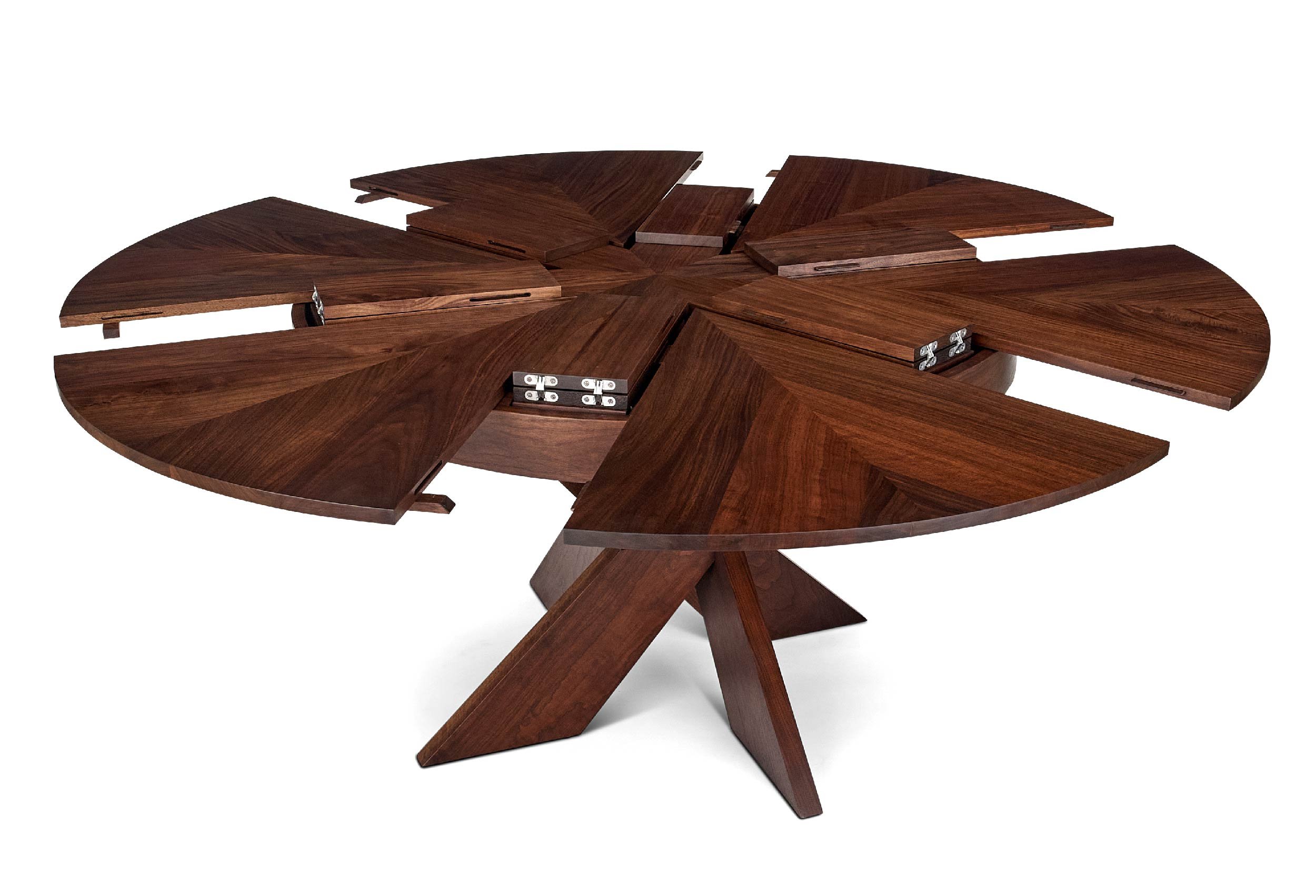
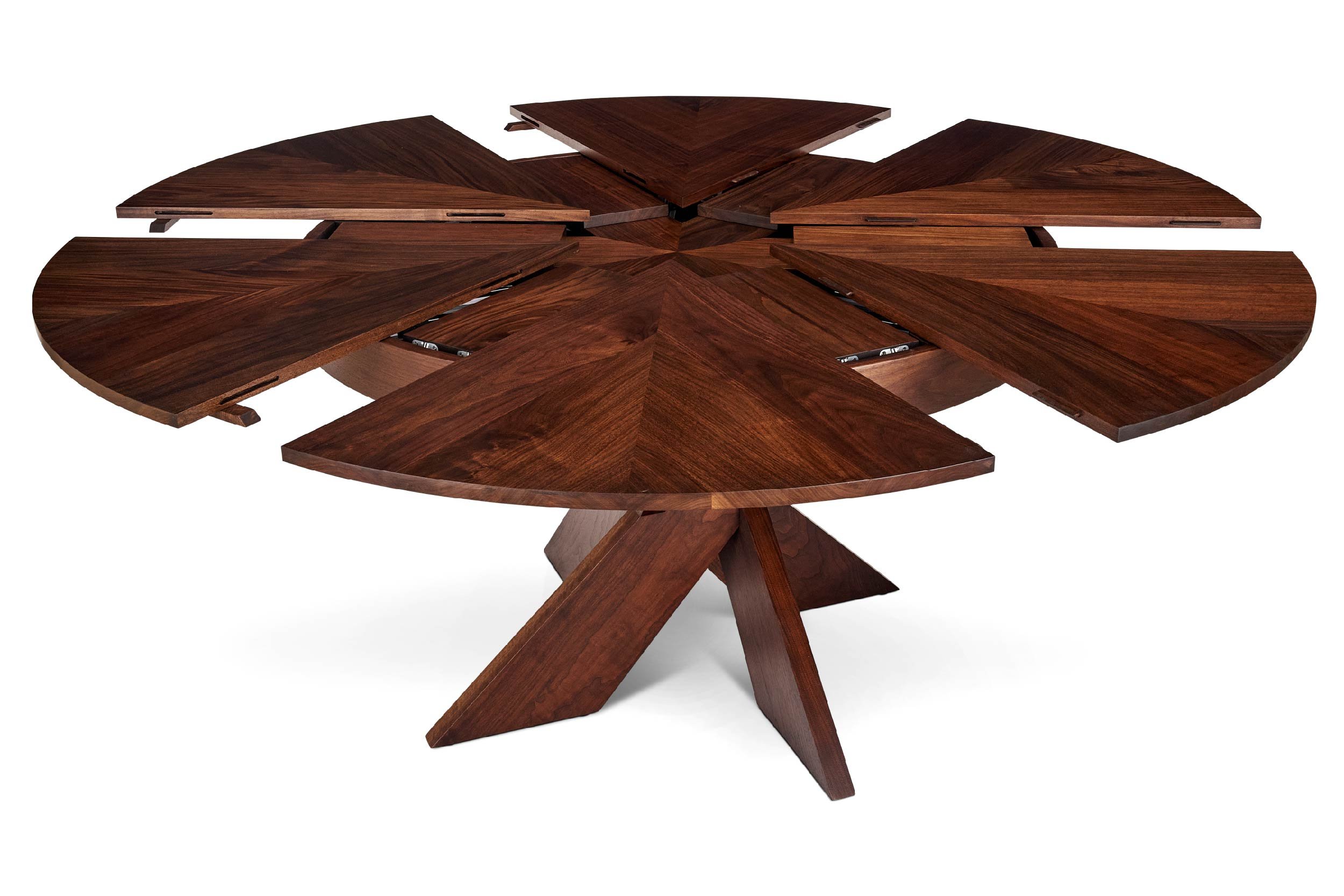
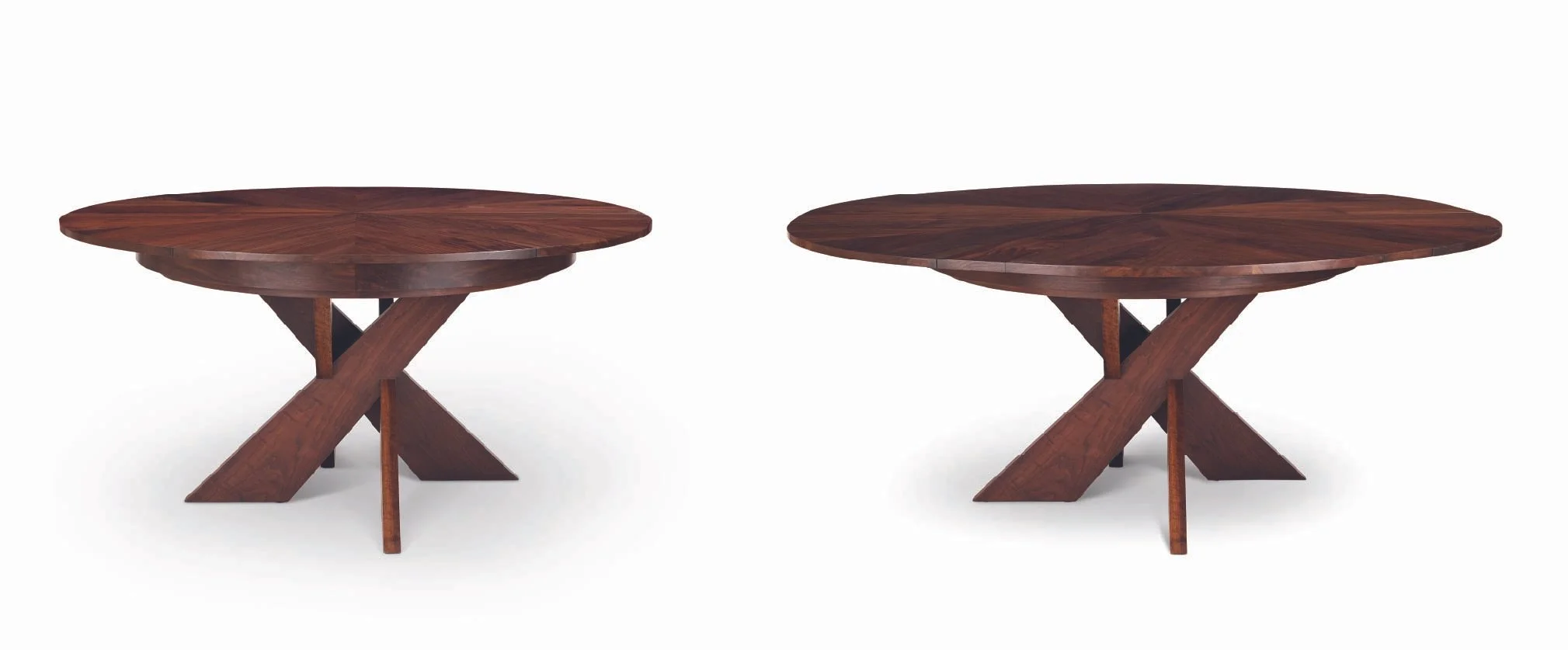
The Iris Table is Keefrider workshop's take on the 19th-century Jupe expanding table, adding in our own signature spin. The original Jupe design featured a unique expansion mechanism that allowed a small circular dining table to expand into a larger circular dining table. As the table was turned, the top split into 6 pie pieces that automatically expanded radially outward, then arrow-shaped leaves were fitted in place, resulting in a larger circular top. An ingenious design that had never been seen before.
“We had to dig down to a whole different level of precision. The parts inside this table are closer to what you’d find in a optics lab than a furniture shop.”
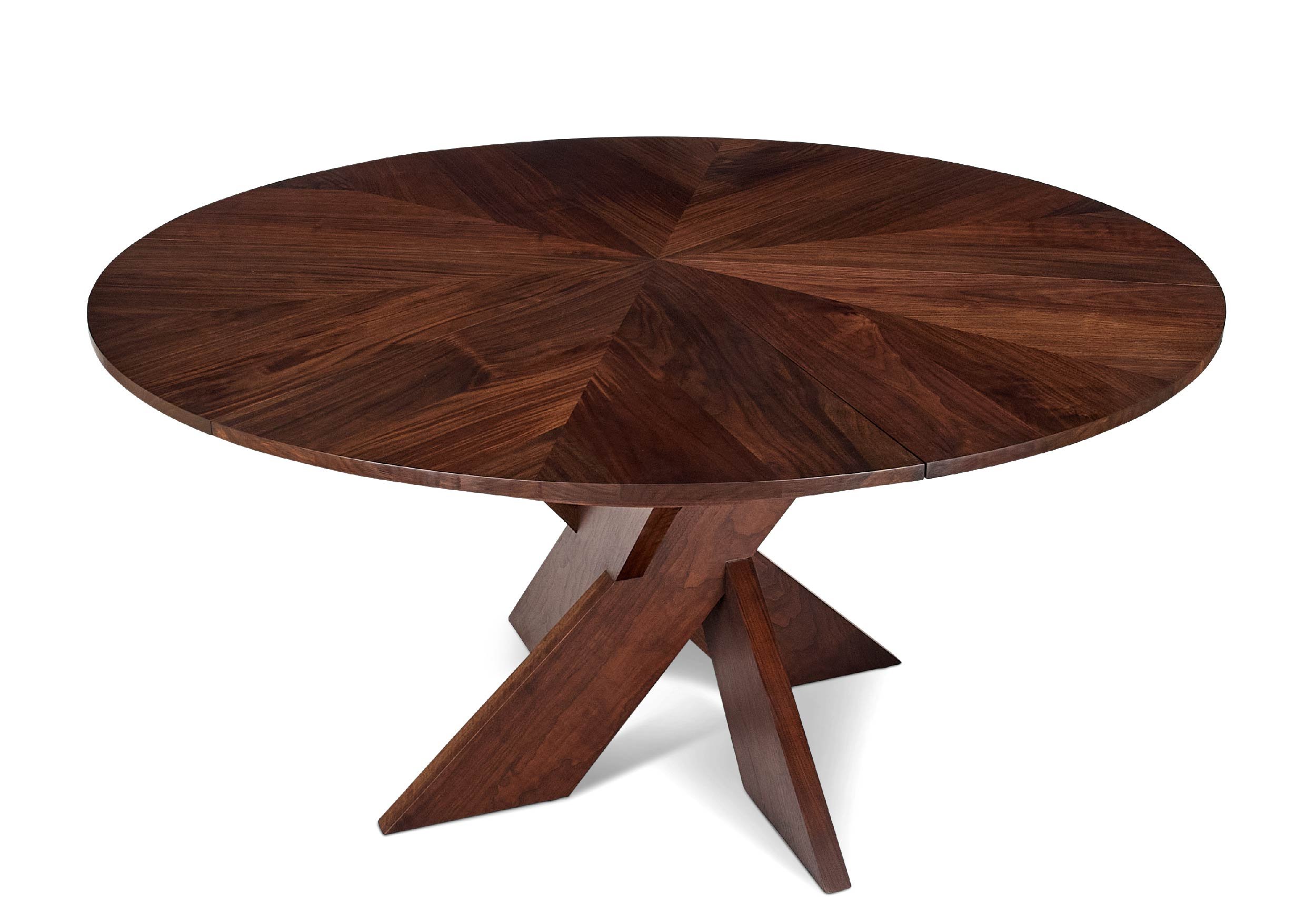
When a client requested to commission a Jupe style dining table, Jay spent months studying the original 1835 Jupe patent and its capstan mechanism, and finally got that 19th-century system working in our modern workshop. He then went a step further, engineering a self-rising leaf system the original Jupe table never had, a feature which is extremely rare in versions of the table built today. Rather than being stored separately outside the table, the leaves in this design rise and rotate up from the center of the table in synchrony as the table is turned and opened, filling the gaps between the expanded pie pieces. To make both systems work together to the exacting standards we and our clients expect, we then rebuilt the mechanism end to end — replacing every part of the original hardware with custom-made, scientific-grade precision components. Sirie was a sounding board throughout that design and engineering work, and helped to build the first prototype, and finally the first Keefrider Iris Table, in Black Walnut, which expanded from a diameter of 5 to 6 feet.
Engineering that borders on horology
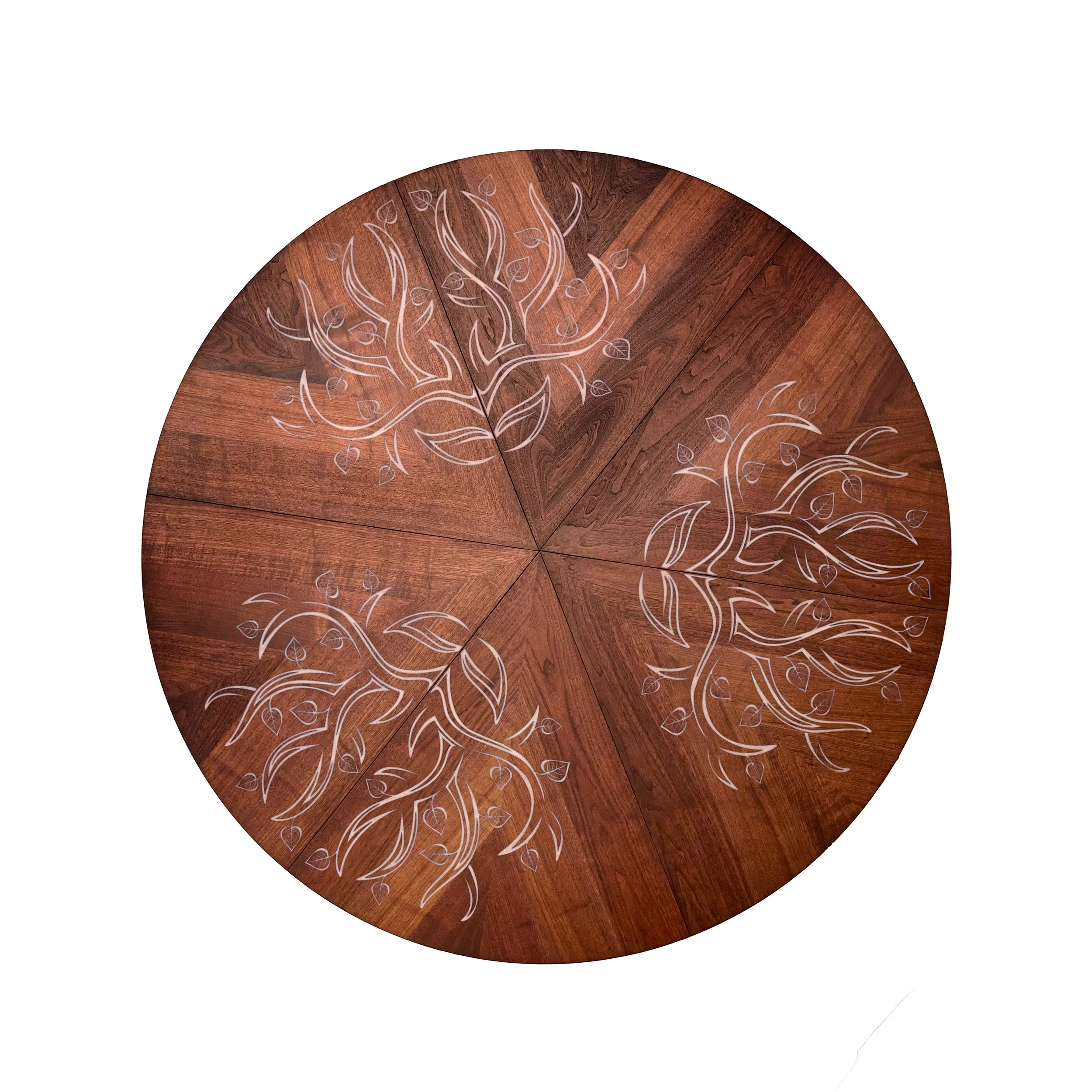
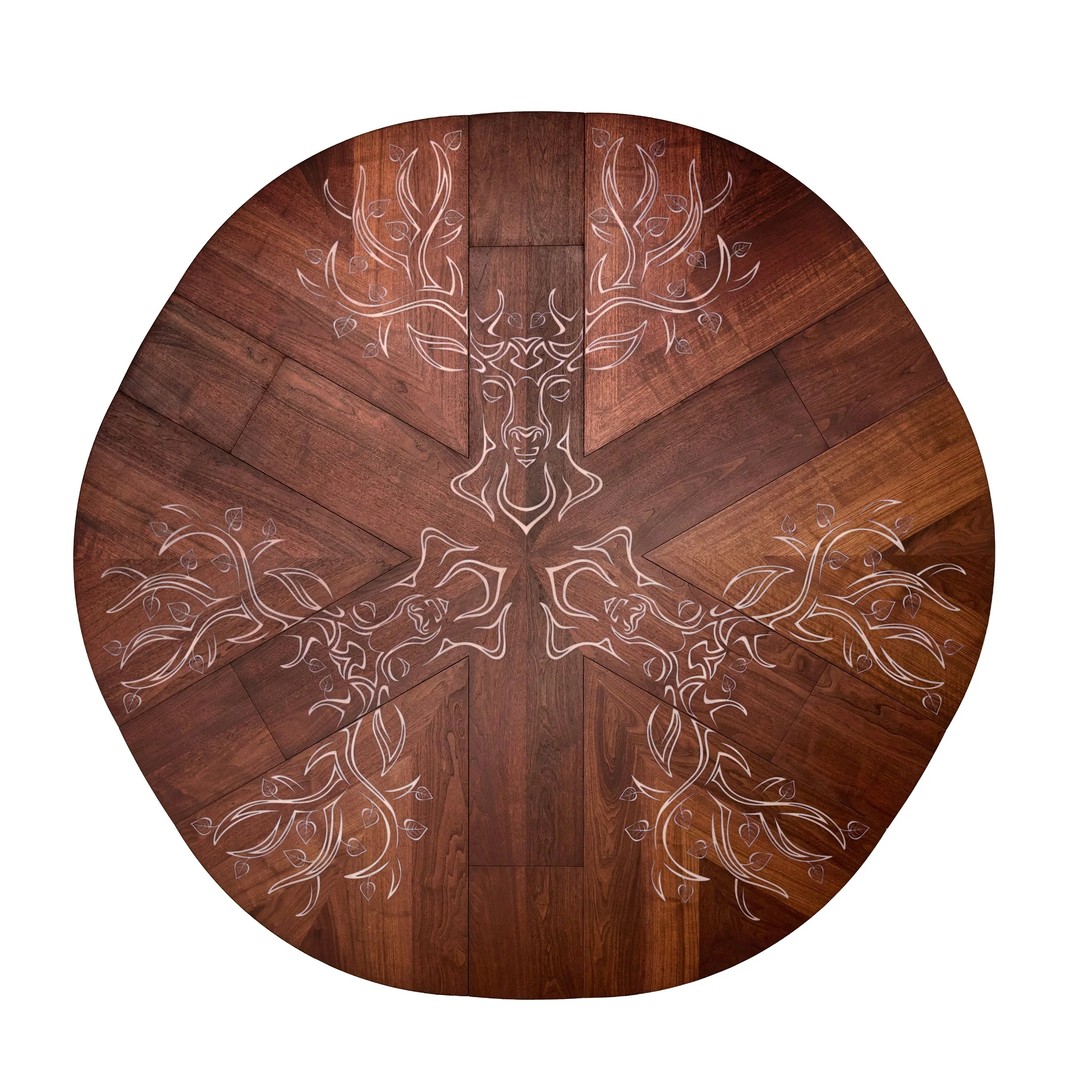
Having seen our Iris Table, a new client commissioned a larger, more complex version. As our workshop’s second take on the Jupe form, this piece was far more demanding than our original Iris. Our client wanted a table that expanded from 6 feet to 8 feet, requiring a rebuilding of the mechanism's tolerances nearly from scratch in order to synchronize movements with precision over such a large span. We also added a new feature: a custom designed inlay that transforms from one image in the smaller table top, to a different image in the larger configuration.
FIRST IRIS TABLE
5 feet > 6 feet
SECOND IRIS TABLE
6 feet > 8 feet
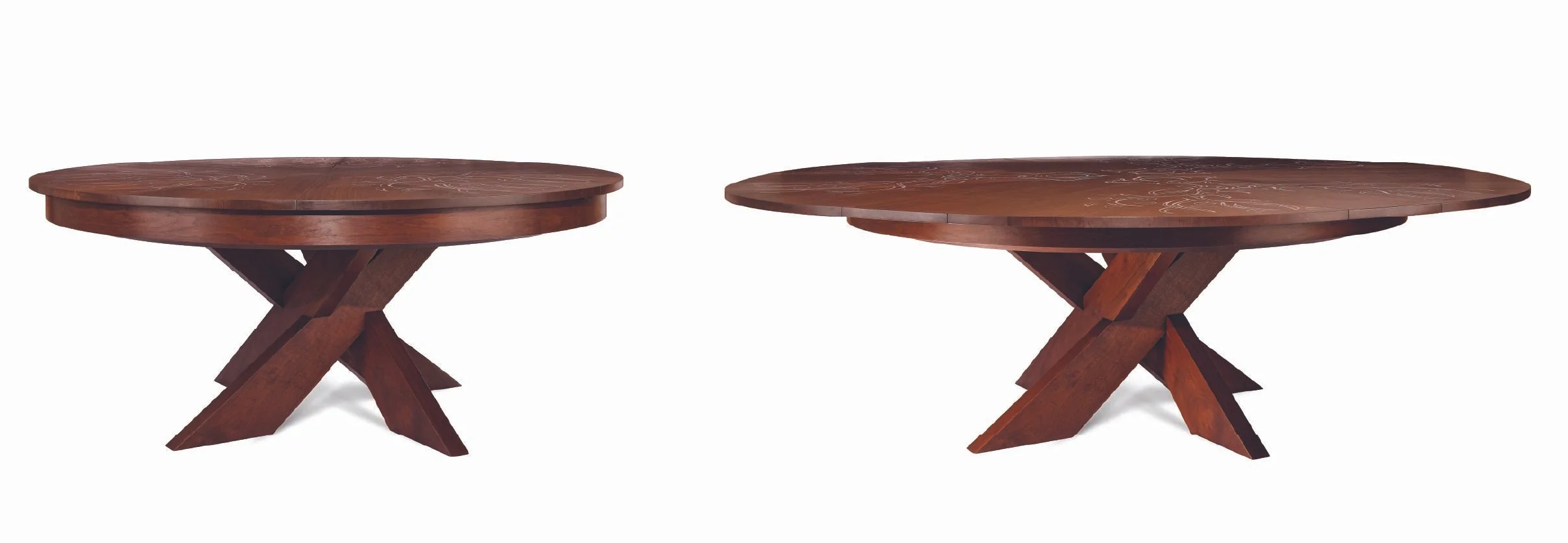
Inlay Design: Transformative Imagery
This table was commissioned for our client’s newly constructed house in Utah, so we wanted to bring some of that character into the piece. Sirie designed a pearlescent inlay featuring a trio of stylized Aspen trees reaching outwards from the center of the smaller top. Aspens are a prominent species in the Rocky Mountains, and in Utah in particular. As the table is rotated, the trees split in half, and a deer’s head emerges between them on the rising leaves. As the larger configuration locks into place, the branches of the trees become the antlers of a Mule Deer stag, also found widespread in the Utah Rockies.
This build took almost a year and a half, largely due to the required reengineering and custom inlay work (timelines on future commissions will vary with the design).